Braces are not a transaction. They are an eighteen-to-twenty-four month relationship with one clinic, and unlike most dental work, a poor outcome is expensive and slow to undo.
Most people choose based on proximity and price. Those matter — but they are the third and fourth questions, not the first two.
Here is what actually separates a good orthodontic decision from a regrettable one.
1 Check whether you're seeing an orthodontist at all
This is the single most important item on the list, and most patients never think to ask.
In India, BDS is the general dentistry degree — five years, qualifying someone to practise dentistry. MDS in Orthodontics & Dentofacial Orthopaedics is a further three years of full-time postgraduate specialisation devoted entirely to tooth movement, jaw growth and bite correction.
A general dentist may legally offer braces. Many do. But the difference between someone who studied orthodontics for three years and someone who attended a certification course over a few weekends is substantial, and it shows up in exactly the cases where it matters most.
How to verify: ask directly which degree the treating doctor holds and where they completed it. Any specialist will answer without hesitation. You can cross-check registration with the State Dental Council. Be alert to clinic branding — "orthodontic centre" describes the premises, not anyone's qualifications. You can verify Dr. Hemlata Tanwani's MDS specialist qualifications here.
2 Ask who will actually treat you
At larger clinics and corporate dental chains, the doctor at your initial consultation is frequently not the doctor who carries out your monthly adjustments, and the person you see may change over the course of treatment.
Orthodontics is a sequence of small judgement calls made over two years, each building directly on the last. Continuity matters more here than in almost any other area of dentistry.
Ask plainly: will the same doctor see me at every single visit?
3 Refuse a treatment plan made without records
A proper orthodontic assessment requires an OPG (full-jaw panoramic X-ray), often a lateral cephalogram to assess skull and jaw relationships, high-resolution intraoral and facial photographs, and dental impressions or a 3D digital scan.
Without these diagnostic records, nobody can accurately predict how long treatment will take, whether extractions are truly necessary, or whether your case is suited for clear aligners. Any quote offered before diagnostic records exist is purely a guess dressed up as a plan.
If a clinic gives you a final price and a timeline after looking into your mouth for ninety seconds, that tells you everything you need to know about how they operate.
4 Ask for the alternatives, not just the recommendation
Most cases can be treated in more than one way. Metal braces, ceramic braces, and clear aligners, planned with or without extractions — each route carries different trade-offs in time, cost, comfort, and predictability.
A true specialist should be able to explain what alternatives were considered and why they were set aside for your specific anatomy. If every patient at a clinic ends up with the exact same appliance, the appliance is driving the plan rather than your clinical diagnosis.
5 Get the extraction question answered honestly
Some cases genuinely need premolar teeth removed to relieve severe crowding and correct jaw protrusion. Some cases genuinely don't. Which category applies to you depends on crowding severity, bone arch width, jaw size, and your soft-tissue facial profile — never on clinic sales policy.
Be sceptical of clinics that market "100% no-extraction" as a blanket guarantee. It is a marketing position, not a clinical one. Forcing a non-extraction plan onto a severely crowded jaw can push teeth outside the alveolar bone envelope that supports them, leading to gum recession and relapse.
Equally, if extractions are recommended, ask why, what the profile trade-offs are, and what the clinical outcome would be if you decline.
6 Find out what happens after the braces come off
Teeth drift throughout life. Every successful orthodontic treatment ends with retainers, worn nightly and indefinitely to preserve your results.
Ask at the first visit: which retainer type will I receive (fixed lingual wire, clear Essix, or Hawley), is the retainer fee included in my quote, what does a replacement cost, and how often will you review my bite post-treatment?
A clinic that hasn't mentioned retainers by the end of your initial consultation hasn't finished explaining the treatment. Relapse after unretained treatment is one of the most common reasons adult patients seek an orthodontist in Wakad years later.
7 Think about the next two years, not the next appointment
The practical details decide whether you actually finish treatment on schedule:
- Distance & Traffic: You will make roughly 18 to 24 clinic visits over the course of braces. A clinic 30 minutes away in traffic costs you a full working day every month. Proximity in Wakad or Hinjawadi is a major advantage.
- Clinic Hours: Do the clinic's operating hours fit your work or school schedule? Evening appointments and weekend availability matter far more than most people anticipate.
- Emergency Care: If a bracket debonds or an archwire starts poking into your cheek on a Friday evening, what is the protocol — and how quickly can you be seen?
Missed or delayed appointments are the single most common reason orthodontic treatment drags on months longer than planned. Convenience isn't a soft factor; it is an active clinical variable.
8 Read the reviews properly
Overall star ratings tell you very little. Read the actual review text instead, paying attention to:
- Reviews describing completed treatment outcomes, rather than just polite front-desk staff at a first visit.
- Mentions of the specific treatment you are considering (e.g. self-ligating braces, Invisalign, teen braces).
- How the doctor and clinic handled unexpected difficulties or emergency repairs when something went wrong.
A handful of detailed, thoughtful reviews from patients who completed a full two-year journey is worth vastly more than hundreds of superficial five-star ratings.
9 Be honest about which kind of clinic suits you
A dedicated single-doctor specialist practice and a multi-branch corporate dental chain are fundamentally different models, and neither is universally superior for every patient.
A chain may suit you better if you relocate frequently and require your orthodontic records to transfer across cities, you depend on standardized corporate financing/EMI plans, or you need multiple satellite branches.
A specialist practice usually suits you better if your dental case is complex, you want the exact same senior specialist examining your teeth at every visit, or you value an unhurried, doctor-led clinical consultation.
Choose based on your personal lifestyle and clinical priorities, rather than generalized marketing claims.
The questions to take with you
Copy this checklist into your phone notes before walking into your initial consultation:
9 Questions to Ask Before Starting Braces
- What is your postgraduate qualification in orthodontics, and where did you complete your MDS?
- Will you personally handle my treatment and adjustments at every single visit?
- What diagnostic records (OPG, cephalometric X-ray, digital scans) will you take before finalising the plan?
- What treatment options exist for my case, and why are you recommending this specific appliance?
- Will I need extractions? What are the clinical reasons for or against them?
- How long will treatment realistically take, and what patient factors could extend it?
- What is the all-inclusive total cost, including retainers, refinements, and emergency visits?
- What happens if a bracket breaks, a wire pokes, or an aligner is misplaced?
- What is your retention protocol after braces are removed to prevent relapse?
If a clinic appears dismissive or impatient with these questions during your first consultation, consider how they will respond when you have questions eighteen months into treatment.
Red flags to watch out for
If you encounter any of the following during your orthodontic visits, pause and consider seeking a second opinion:
Orthodontic Warning Signs
- A fixed price quoted before X-rays are taken: Reliable biomechanical plans cannot be formulated by visual inspection alone.
- High-pressure sales tactics: Demands for same-day non-refundable deposits or "today-only" discounts.
- Unrealistic duration guarantees: Promising complete bite correction in "just 6 months" for complex malocclusions.
- Aggressive discounting on complex clinical care: Quality materials, sterilization, and dedicated specialist time have real baseline costs.
- No written diagnostic treatment plan: You should always receive clear documentation of stages, appliances, and expectations.
- Reluctance to state qualifications: Hesitation or deflection when asked whether the treating clinician holds an accredited MDS in Orthodontics.
If you're looking for an orthodontist in Wakad
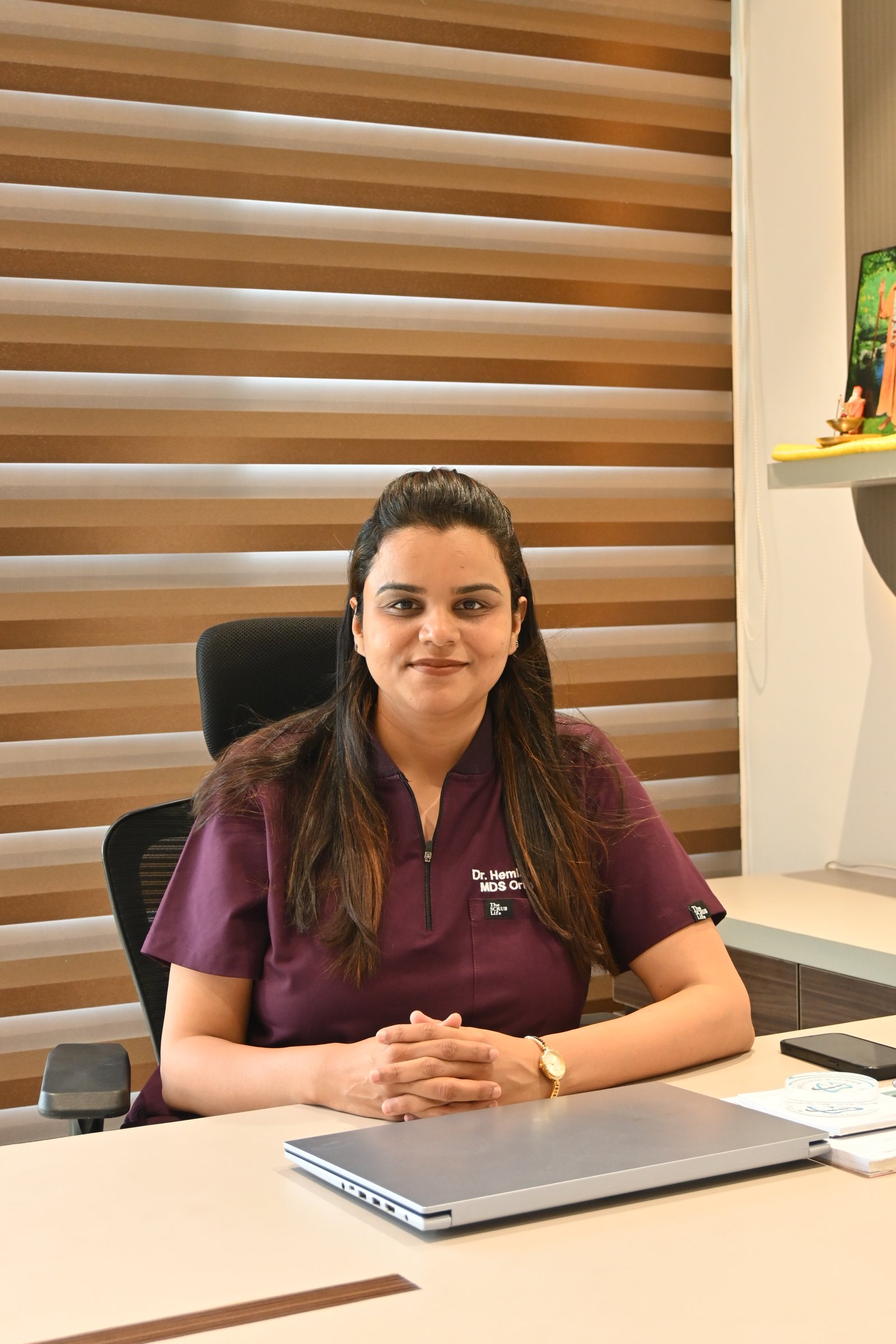
Dr. Hemlata Tanwani
Dr. Hemlata Tanwani completed her five-year dental training followed by three intensive years of full-time master's specialisation in Orthodontics & Dentofacial Orthopaedics. She personally designs every treatment plan and executes every adjustment visit — ensuring seamless continuity of care from initial scan to post-treatment retention.
At Dr. Tanwani's Braces & Dental Clinic in Wakad, we have invested in on-site digital OPG imaging. That means comprehensive orthodontic diagnostics, bone evaluations, and initial impressions take place under one roof in a single visit, without requiring trips to external diagnostic centres.
We welcome patients across Wakad, Hinjawadi Phase 1, Pimple Saudagar, Baner, Tathawade, and the broader PCMC region. Our clinic operates Tuesday through Sunday from 10:00 AM to 9:00 PM, providing convenient evening and weekend slots for working professionals and school-going children.
For parents assessing young children, review our companion clinical guide: Best Age for Braces: When Should Your Child See an Orthodontist?
Bring the nine checklist questions above to your first visit. We would much rather answer them thoroughly than have you start treatment with unresolved doubts.
Frequently Asked Questions
Consult with an MDS Orthodontist in Wakad — Dr. Tanwani's Braces & Dental Clinic
Office 303, 57 Avenue, Shivraj Nagar Road, Shankar Kalat Nagar, Wakad, Pune 411057. On-site OPG imaging available.