Most people arrive having already half-decided. They have seen the aligner advertising, or a colleague's ceramic braces, and they want to know whether the thing they have in mind will work for them.
It is the right question, but it is usually asked in the wrong order.
Both appliances move teeth using the same biology: sustained, gentle force that remodels the bone around the root. Neither is a better machine than the other. What separates them is the range of movements each performs predictably, and how much of the outcome depends on you rather than on the appliance.
What actually differs
| Clear aligners | Fixed braces | |
|---|---|---|
| Visibility | Nearly invisible at conversational distance | Visible; ceramic brackets far less so than metal |
| Removable | Yes, for eating and brushing | No, fixed until treatment ends |
| Depends on you | Heavily. 20–22 hours of wear a day | Very little. They work whether you remember or not |
| Food restrictions | None. Trays come out | Hard and sticky foods avoided throughout |
| Cleaning | Normal brushing and flossing | Slower; needs interdental brushes and care |
| Complex movements | Limited for large rotations and big height changes | Handles the full range, including extraction cases |
| Typical comfort | Pressure with each new tray; no ulcers | Soreness after adjustments; occasional ulcers |
| Relative cost | Higher, though the gap has narrowed | Metal most affordable; ceramic in between |
Where braces are the better choice
Fixed appliances remain the more capable tool, and for some cases they are not merely preferable but necessary:
That last point is not a judgement. It is the single most useful thing a patient can be honest about during the consultation, because it changes the recommendation more than almost anything visible on the X-ray.
Where clear aligners are the better choice
For a large share of adult cases, clear aligners do the job and fit the life around it:
- Mild to moderate crowding or spacing, which covers most adults seeking treatment
- Relapse after earlier treatment — teeth that drifted after retainers were abandoned years ago
- Work that is client-facing, where visible brackets are a genuine professional concern
- Gum disease risk or a history of decay, since being able to remove the appliance makes cleaning far easier
- Contact sports or wind instruments, where brackets cause practical difficulty
The factor that usually decides it
Once a case is suitable for either, the decision rarely comes down to the appliance. It comes down to wear time.
Aligners work only while they are in the mouth. The plan assumes 20 to 22 hours a day, which in practice means they come out for meals and go straight back in. At 14 or 16 hours a day, teeth stop tracking the plan: trays stop seating fully, the sequence falls out of step, and treatment extends by months or has to be restarted with new scans.
Braces remove that variable entirely. They apply force continuously whether the day went well or badly. For some patients that is a limitation; for others it is precisely the point.
What differs less than you would expect
Treatment time
For comparable cases, timelines are broadly similar. Aligners sometimes finish sooner in simple cases, but the headline figures in advertising usually describe mild crowding, not the average case.
The final result
Where a case is genuinely suited to either approach, a well-planned aligner treatment and a well-planned fixed treatment arrive at the same place. The planning and the review schedule matter far more than the hardware.
Needing a retainer afterwards
Both require one, permanently in some form. Teeth drift for life, and no appliance changes that. Anyone presenting retainers as optional, with either method, is worth questioning.
Three things worth clearing up
"Aligners are only for minor cases"
Outdated. Attachments, elastics and staged sequencing have widened what aligners handle considerably. The limits are real but much narrower than they were a decade ago.
"Braces are only for children"
Adults form a growing share of orthodontic patients. Healthy teeth move at any age. What changes with age is that jaw relationships can no longer be guided by growth, so some corrections are approached differently.
"The brand on the box determines the result"
Aligner systems are manufacturing processes. The diagnosis, the plan and the clinician reviewing progress every few weeks determine the outcome. A well-planned case on a modest system beats a poorly planned one on a premium brand.
How the choice is made at the clinic
Where a case suits both, you choose. Where it genuinely does not, you will be told so and given the reason, rather than sold the appliance you walked in asking about. Our guide on how to choose an orthodontist covers what else to check before committing.
Frequently asked questions
Decide with a proper assessment
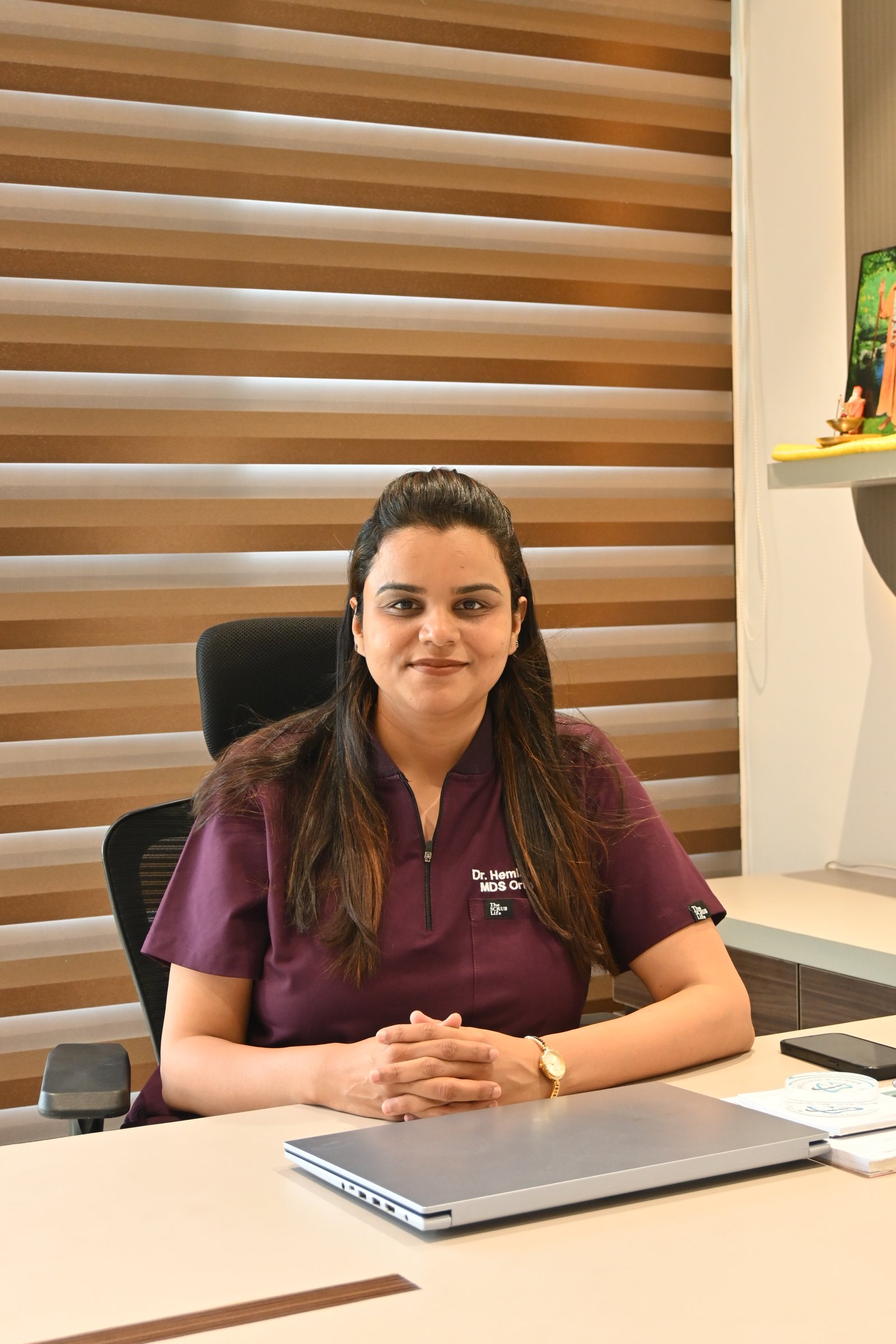
Dr. Hemlata Tanwani (MDS – Orthodontics & Dentofacial Orthopaedics) will tell you which approaches your case genuinely suits, and why. Serving Wakad, Hinjewadi, Pimple Saudagar, Tathawade, Punawale and Ravet.
Dr. Tanwani's Braces & Dental Clinic — Office 303, 57 Avenue, Shivraj Nagar Road, Shankar Kalat Nagar, Wakad, Pimpri-Chinchwad 411057. Five minutes from Hinjawadi Phase 1.
In-house OPG imaging available for same-visit diagnosis.